Historical Hike around North/South Lake
Posted: Tue Nov 23, 2010 8:59 am
I decided to do an "exploration" hike around North/South Lake on Saturday 11/20/2010. Being a railroad buff, I was especially interested in seeing some of the railroad artifacts in the area.
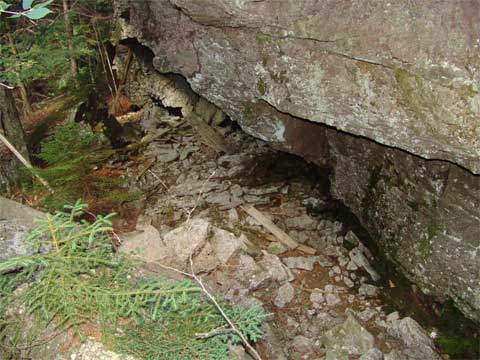
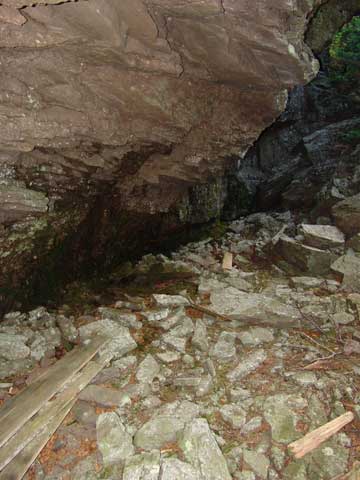
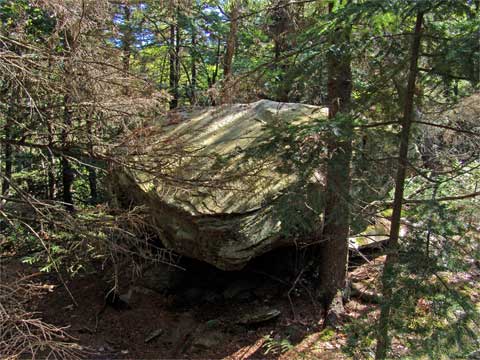
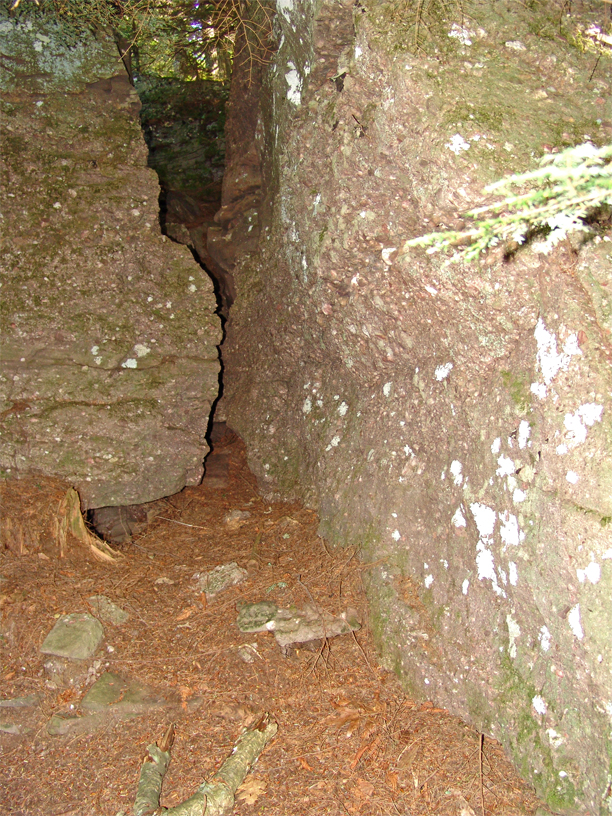
The Ulster and Delaware Railroad water tank foundation is just west of the South Lake parking area. There is also a turntable pit located about 100 feet west of the water tank. This is the grade for the Rips Retreat Railroad, which was an amusement park ride in the 1950's. As you descend the horse trail from North Lake to the site of the Rip Van Winkle House, you will notice a raised berm to your left, which is the grade for the railroad. The railroad was less than a quarter of a mile long and ran in a circle on the ledge immediately below (i.e. east) of North Lake. This is Puddingstone Hall, one of the favorite destinations for guests staying at the Catskill Mountain House. This view of the Otis Elevating Railroad was taken from Eagle Rock using a 300 mm zoom lens. Eagle Rock is a few hundred feet south of the Catskill Mountain House site along the Escarpment trail. The trestle is much larger than it looks and is approximately 300 feet long and at least 30 feet high. It is accessible by hiking down the Otis railbed, although I highly recommend NOT attempting to cross it. Most of the deck is gone and the bridge is extremely dangerous. This is the Lemon Squeezer and was located along the old trail from the Catskill Mountain House to Puddingstone Hall. There has been much confusion between the Lemon Squeezer and Elfin Pass, which is located near Fairy Spring. The two names have been used interchangeably for both sites, although period photos from this location always identify it as the Lemon Squeezer. Many thanks to Bob Guildersleeve for showing me this hard-to-find location. This is Fairy Spring, which is an absolutely beautiful area just a few hundred feet from the Escarpment Trail. If you are walking east from the Hotel Kaaterskill site along the old carriage road, you will come to a junction where the Escarpment Trail turns right (blue markers) towards Boulder Rock and the carriage road continues straight (red markers). If you make a left (north) and bushwhack a few hundred feet, you will come to Fairy Spring. Please be advised there are numerous caves in the ledge just above Fairy Spring that could easily support bears. Please use caution while exploring the area! This is Druid Rocks, which have to be one of the most "other worldly" sites in the Catskills. Druid Rocks are located just west of Puddingstone Hall. They remind me of the cheesy sets on the old "Star Trek" TV show where the surface of planets would be dressed with huge styrofoam rocks. This is perhaps the most famous Druid Rock, and has been described as resembling various animals including a toad, a rabbit, and a bear. This is what is left of the old water tank for the Catskill Mountain House. The ruins are located northeast of Puddingstone Hall. This water tank was used by the Catskill and Tannersville narrow gauge railroad until 1918 when the railroad was abandoned. It is amazing that the tank still stands after nearly 100 years.
The Ulster and Delaware Railroad water tank foundation is just west of the South Lake parking area. There is also a turntable pit located about 100 feet west of the water tank. This is the grade for the Rips Retreat Railroad, which was an amusement park ride in the 1950's. As you descend the horse trail from North Lake to the site of the Rip Van Winkle House, you will notice a raised berm to your left, which is the grade for the railroad. The railroad was less than a quarter of a mile long and ran in a circle on the ledge immediately below (i.e. east) of North Lake. This is Puddingstone Hall, one of the favorite destinations for guests staying at the Catskill Mountain House. This view of the Otis Elevating Railroad was taken from Eagle Rock using a 300 mm zoom lens. Eagle Rock is a few hundred feet south of the Catskill Mountain House site along the Escarpment trail. The trestle is much larger than it looks and is approximately 300 feet long and at least 30 feet high. It is accessible by hiking down the Otis railbed, although I highly recommend NOT attempting to cross it. Most of the deck is gone and the bridge is extremely dangerous. This is the Lemon Squeezer and was located along the old trail from the Catskill Mountain House to Puddingstone Hall. There has been much confusion between the Lemon Squeezer and Elfin Pass, which is located near Fairy Spring. The two names have been used interchangeably for both sites, although period photos from this location always identify it as the Lemon Squeezer. Many thanks to Bob Guildersleeve for showing me this hard-to-find location. This is Fairy Spring, which is an absolutely beautiful area just a few hundred feet from the Escarpment Trail. If you are walking east from the Hotel Kaaterskill site along the old carriage road, you will come to a junction where the Escarpment Trail turns right (blue markers) towards Boulder Rock and the carriage road continues straight (red markers). If you make a left (north) and bushwhack a few hundred feet, you will come to Fairy Spring. Please be advised there are numerous caves in the ledge just above Fairy Spring that could easily support bears. Please use caution while exploring the area! This is Druid Rocks, which have to be one of the most "other worldly" sites in the Catskills. Druid Rocks are located just west of Puddingstone Hall. They remind me of the cheesy sets on the old "Star Trek" TV show where the surface of planets would be dressed with huge styrofoam rocks. This is perhaps the most famous Druid Rock, and has been described as resembling various animals including a toad, a rabbit, and a bear. This is what is left of the old water tank for the Catskill Mountain House. The ruins are located northeast of Puddingstone Hall. This water tank was used by the Catskill and Tannersville narrow gauge railroad until 1918 when the railroad was abandoned. It is amazing that the tank still stands after nearly 100 years.